
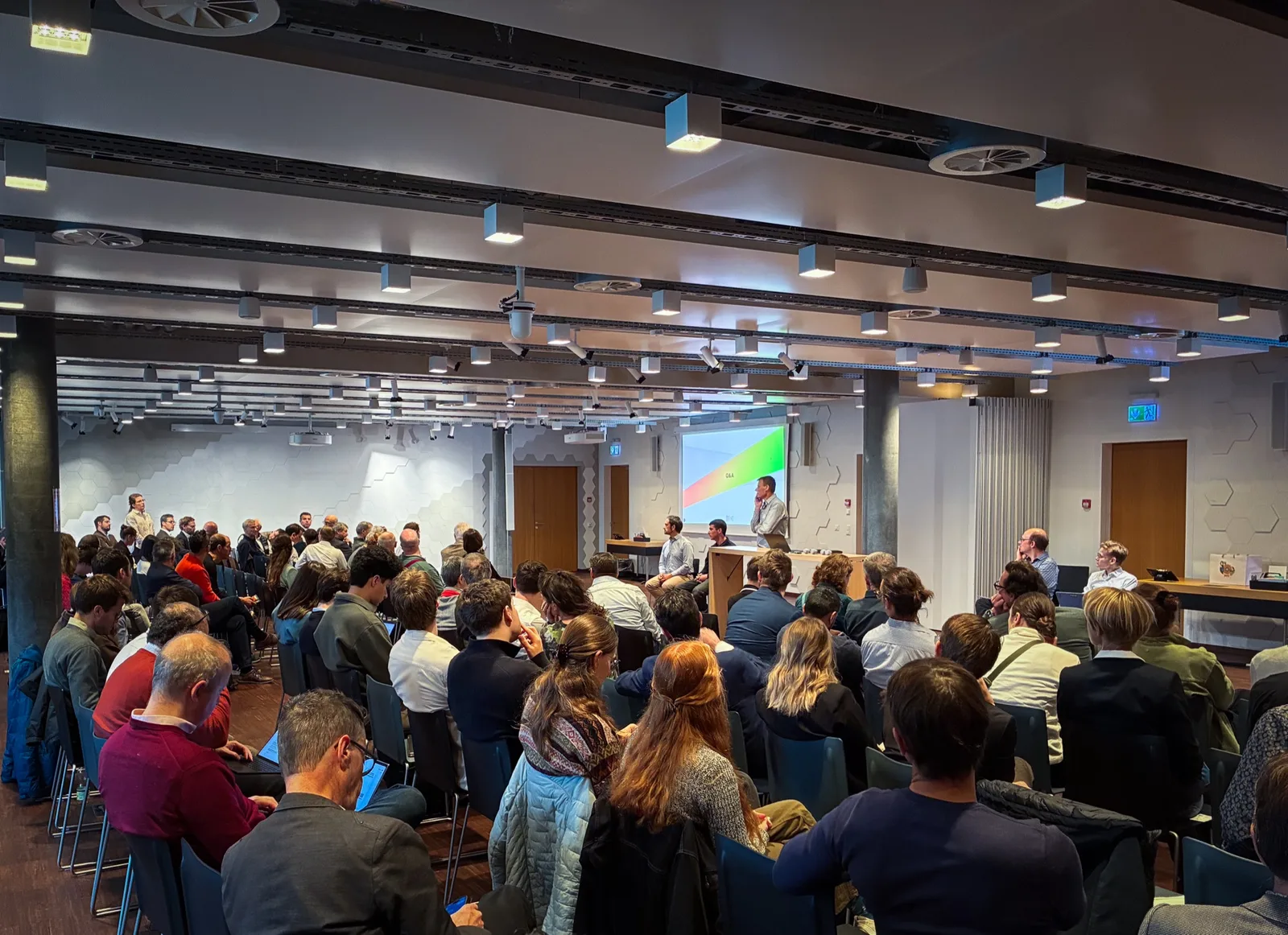
Switzerland has the options. Now it needs to choose.
On 11 November 2026, researchers, utilities, grid operators, NGOs and federal officials gathered at Welle 7 in Bern for the final conference of SWEET EDGE, the SFOE-funded consortium coordinated by the University of Geneva and EPFL. Over a full day of presentations, panels and deep dives, one message stood out: a largely renewable Swiss electricity system is within reach. Whether it gets built depends on politics, fairness and trust.
Renewables can do the job. The third EDGE Renewable Energy Outlook compared five Swiss energy system models. They agree that 35 TWh/year of new renewable electricity by 2035 and 45 TWh by 2050 are feasible without fossil fuels or new nuclear power. Rooftop solar needs to be complemented by wind and alpine PV, and open electricity trade with Europe remains key. A panel on renewables versus new nuclear power then put these findings to a lively debate.
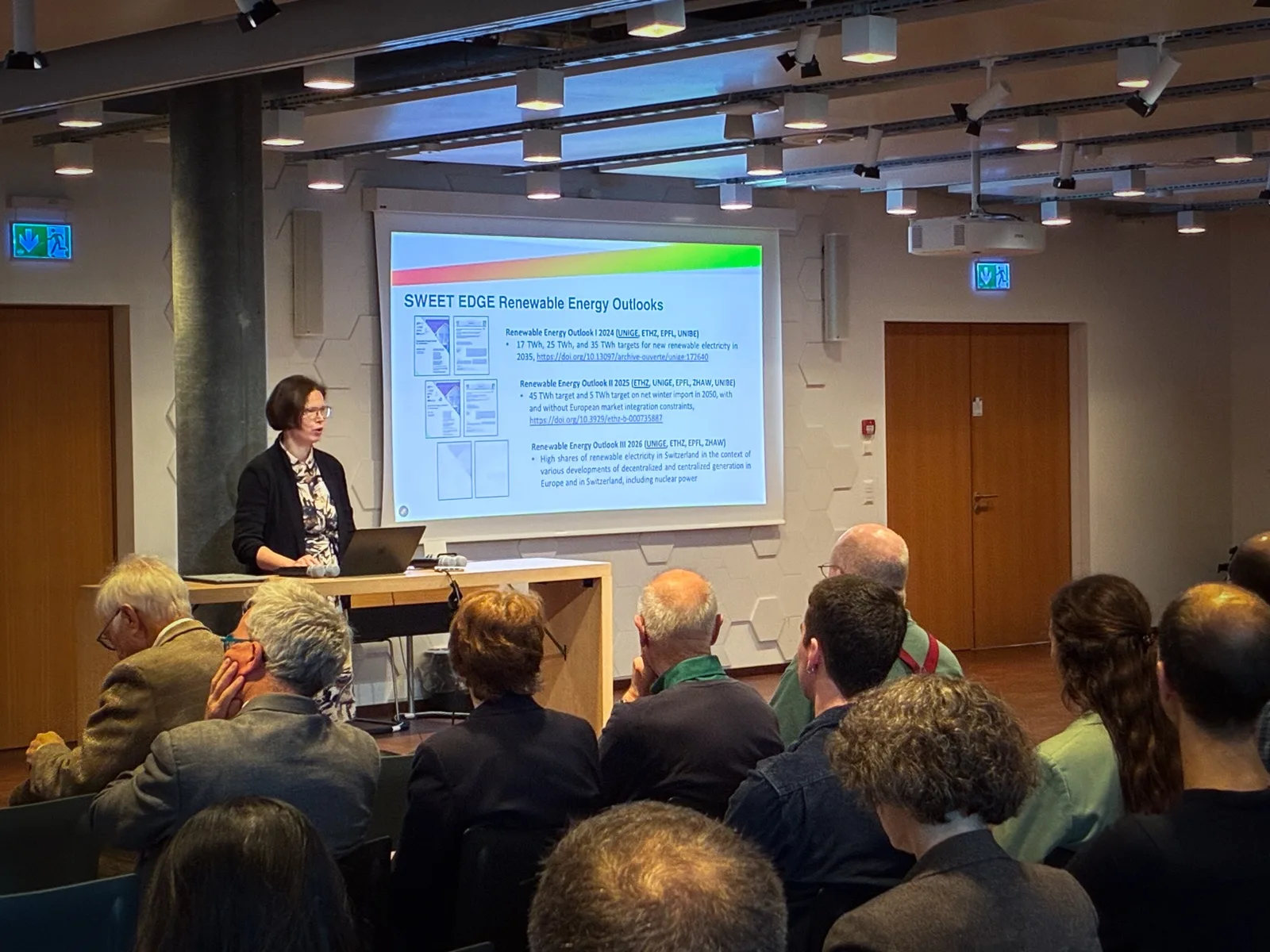
Presenting the three SWEET EDGE Renewable Energy Outlooks.
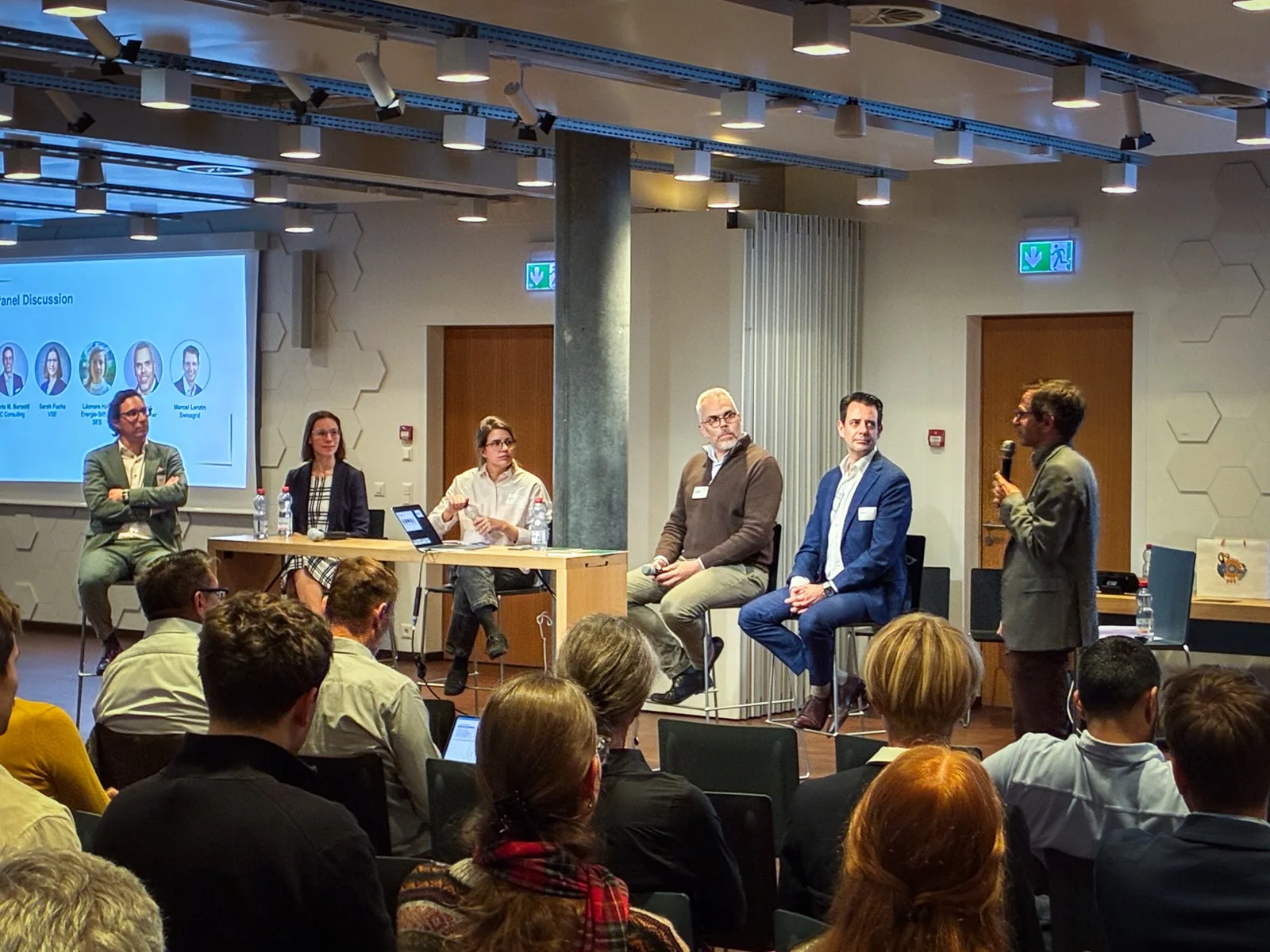
Panel discussion in the main hall.
Acceptance and fairness are the real tests. Concrete projects fare better than the public debate suggests: 70% of local votes on wind projects have gone in favour. The harder problem is cost. EDGE research shows that once people see who pays for climate policies, support drops, and compensation does not easily win it back. EDGE's new white paper on who wins and who loses from the energy transition sets out how to design policies that are both effective and fair.
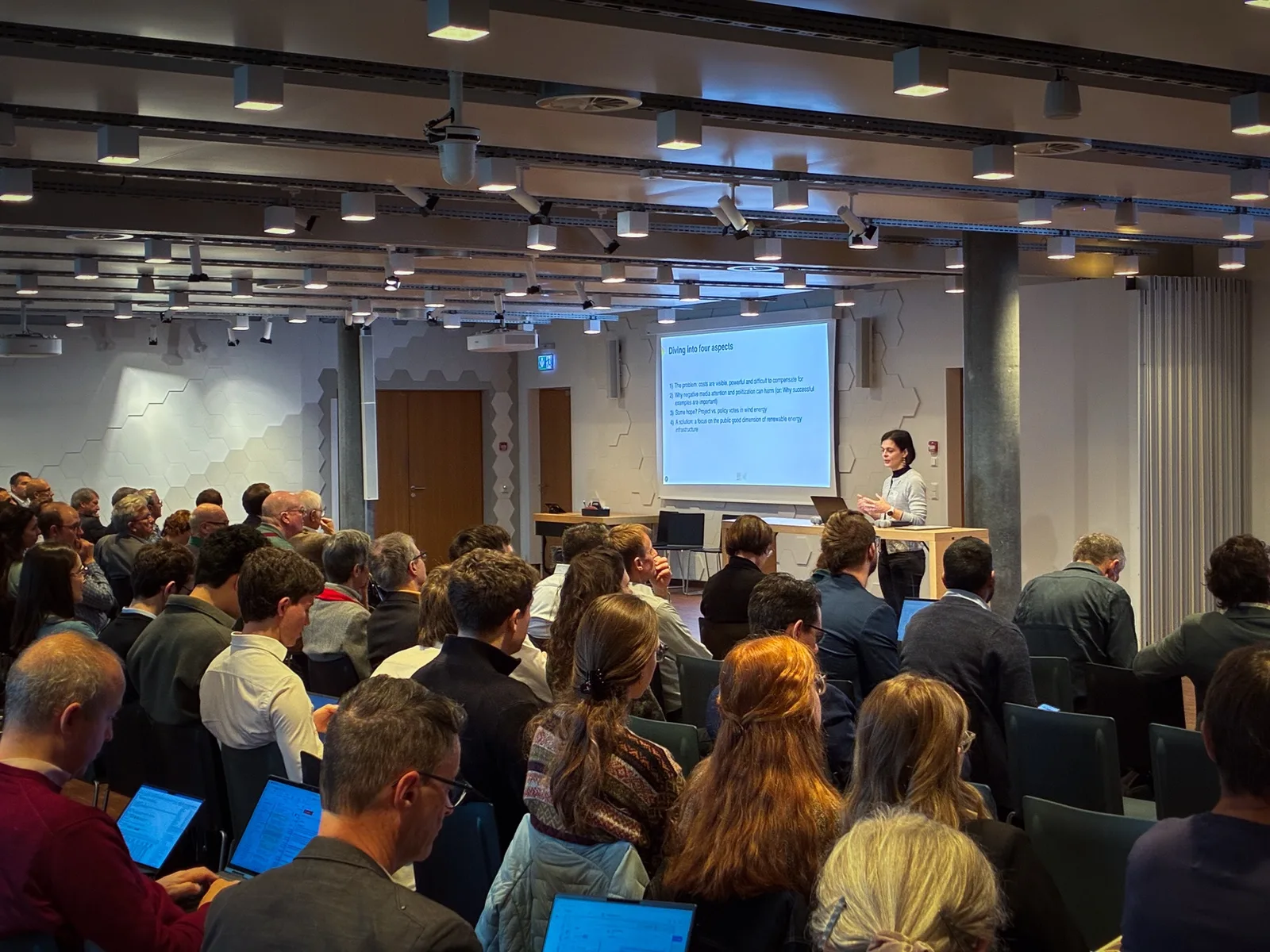
Research on costs, public acceptance and local votes on wind energy.
Smarter grids, not just bigger ones. Switzerland does not need to build its grids for every last kilowatt-hour of solar. Dynamic grid connections, and the flexibility of heat pumps, electric vehicles and batteries, can integrate far more PV into existing networks. But none of it works without users on board.
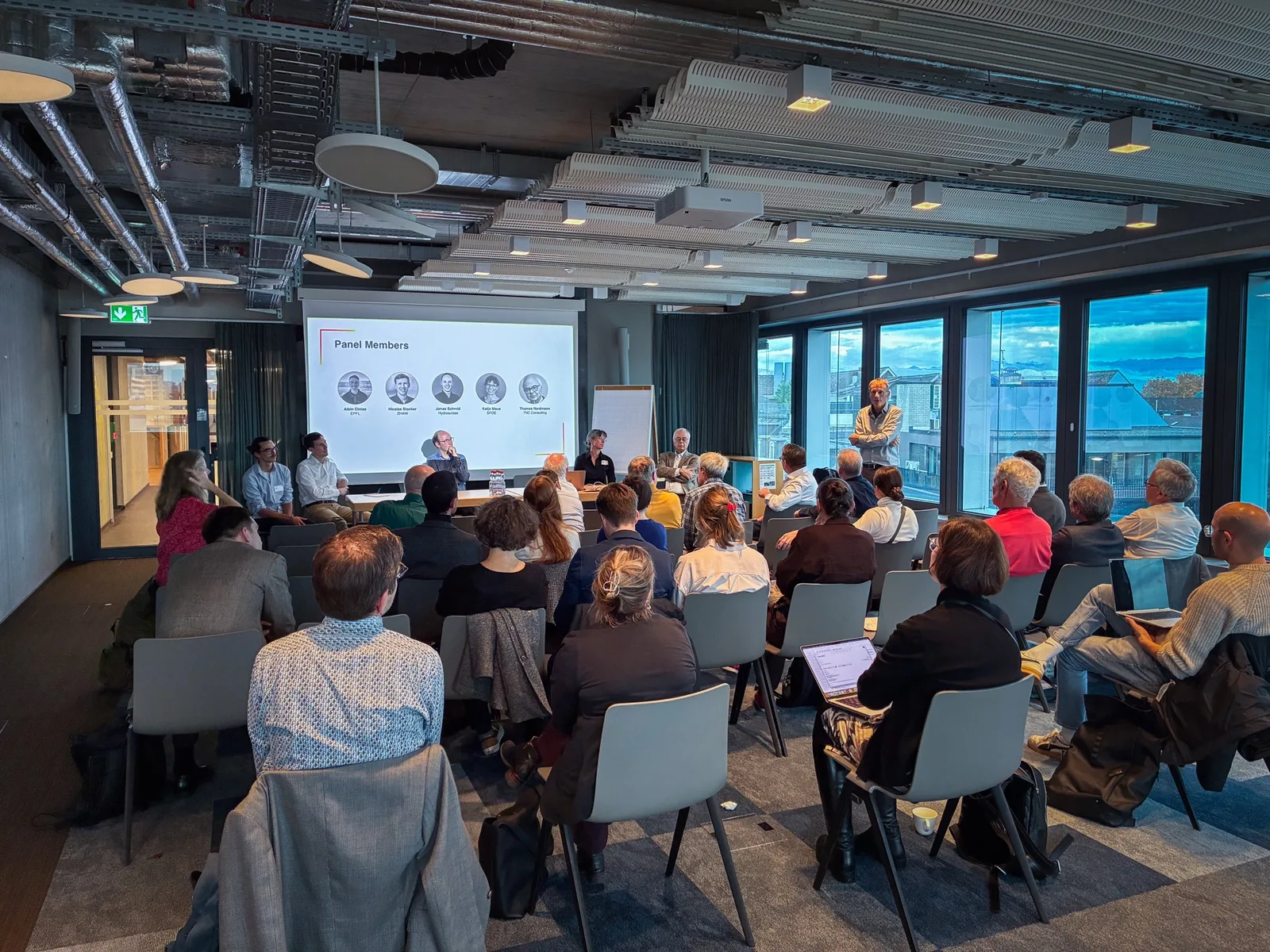
One of the afternoon deep-dive sessions.
What comes next. The closing panel called for more work on grid stability, electrification, people's behaviour and, above all, real-world demonstration that shows communities the transition works. In her farewell, Evelina Trutnevyte noted that few countries are as well placed as Switzerland to run a fully renewable electricity system. EDGE's interdisciplinary insights will help it get there.
Thank you to all speakers, panellists and participants, and to SFOE for funding EDGE through the SWEET programme. The project runs for a few more months, and its Renewable Energy Outlooks, policy insights and publications remain available on this website.